
The best rim joist insulation for a BC home is closed-cell spray foam, sprayed straight into the band where your floor framing meets the foundation. That strip of wood is one of the leakiest spots in the whole house, and most people have never once looked at it. It sits in the dark above the foundation wall, quietly letting heat out and cold air in, every hour of every winter. Seal it right and your floors warm up and your furnace finally gets a break.
What a rim joist actually is
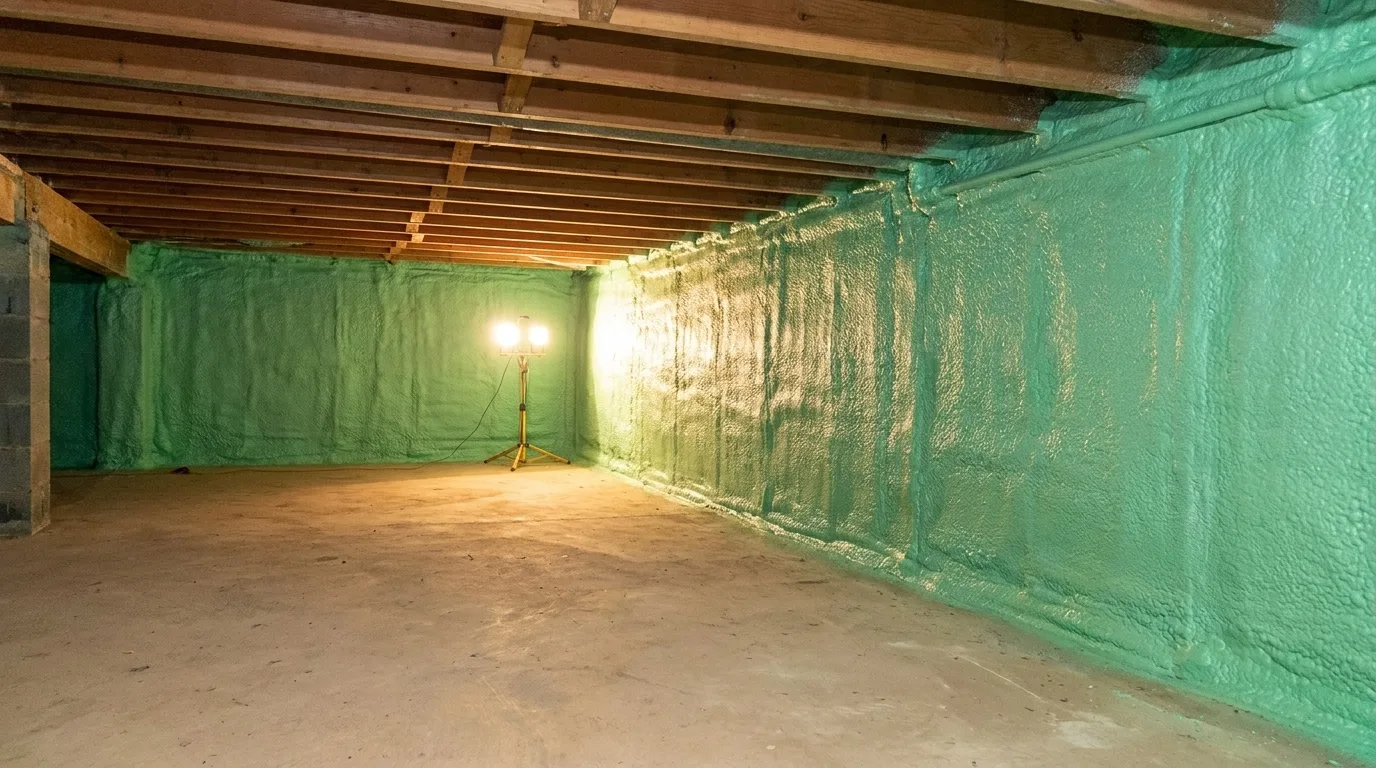
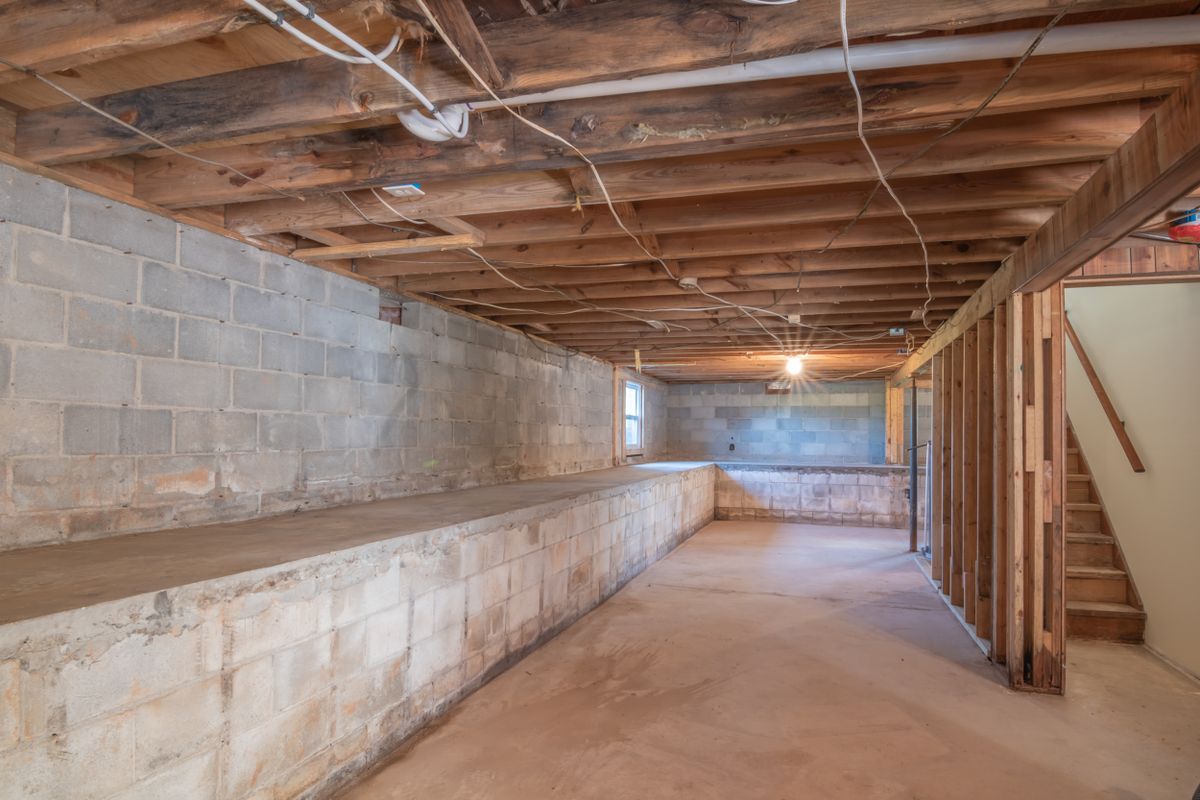
If you have never crawled down to look, here is the plain version. The rim joist, sometimes called the band joist, is the board that caps the ends of your floor joists where the floor sits on top of the foundation. It runs around the whole perimeter of the house. You will find it in the basement or the crawl space, just above the concrete, usually still bare wood after all these years.
It is a small piece of the house that does an outsized amount of damage. It is the seam between two different materials, wood and concrete, and seams leak. It is thin. It is full of joins where one joist meets the rim and the rim meets the sill plate. And nobody insulates it properly when the house is built, because it is awkward to reach and easy to skip.
Why the rim joist leaks so much heat
Warm air rises. That is the whole problem in one sentence. The warm air in your house pushes up and out, looking for any gap it can find, and the rim joist is a ring of gaps wrapped around the top of your foundation.
On a lot of older homes the rim joist leaks more air than every window in the place put together. Think about that. People spend twenty grand on new windows and never touch the strip of bare wood that is leaking more than the windows ever did. The rim joist has been costing you money since the day the house was built. It just never sent you an invoice.
You feel it as cold floors. The cold air pours in low, the warm air leaks out high, and the floor over the basement or crawl space stays cold no matter how high you crank the thermostat. The furnace runs longer to keep up, and you see that on the bill in January.
Why fiberglass at the rim joist is a slow rot
The most common thing we pull out of a rim joist is a sad piece of fiberglass batt, jammed in there by a framer in a hurry. It feels like insulation, so people leave it for thirty years. It is not doing what they think.
Fiberglass works by trapping still, dry air. It does nothing to stop air from moving through it. So the warm, moist air from your house pushes right through that batt and reaches the cold wood of the rim joist behind it. When warm moist air hits a cold surface, the moisture comes out as condensation, and in a real cold snap, as frost. A few winters of that quietly soaking the wood and the rim joist starts to rot. You do not see it. It is behind the batt, in the dark, doing damage where nobody looks.
Closed-cell foam stops the air before it ever reaches the wood. No air means no moisture getting back there, which means no condensation and nothing to rot. It is a different way of solving the problem, and in our climate it is the only one that holds up.
Closed-cell spray foam, and the numbers behind it
The foam we use is Genyk Boreal Nature Elite. It is Canadian made and it is the best foam on the market, and the numbers are the reason we picked it.
It is an air barrier with an air permeance of 0.001 litres per second per square metre. In plain terms, air does not get through it, which is exactly what you want on the leakiest band in the house. It hits R-30.7 at five inches, so a few inches sprayed into the rim joist does real work in a tight space. It absorbs only 1.6 percent of its volume in water and shows no fungus growth in testing, so the moisture problem that rots out fiberglass simply does not start. It even carries a radon barrier certification, which matters more than people think in parts of the Interior where radon shows up in the soil.
Here is the honest part. Spray foam is expensive, and we do not pretend otherwise. But every dollar of that price is doing something. Better foam, trained operators, certified equipment, density checks, two inch passes, no shortcuts. You cannot see behind your rim joist after the job is done. You will not know if you got three inches instead of four until your heating bill tells you something is off. The cheap guy costs more in the end, every time, because foam done wrong has to be torn out and done again. If you want the full breakdown, our spray foam insulation cost in BC guide lays the pricing out in detail.
New build or existing home, plus the spot right next to it
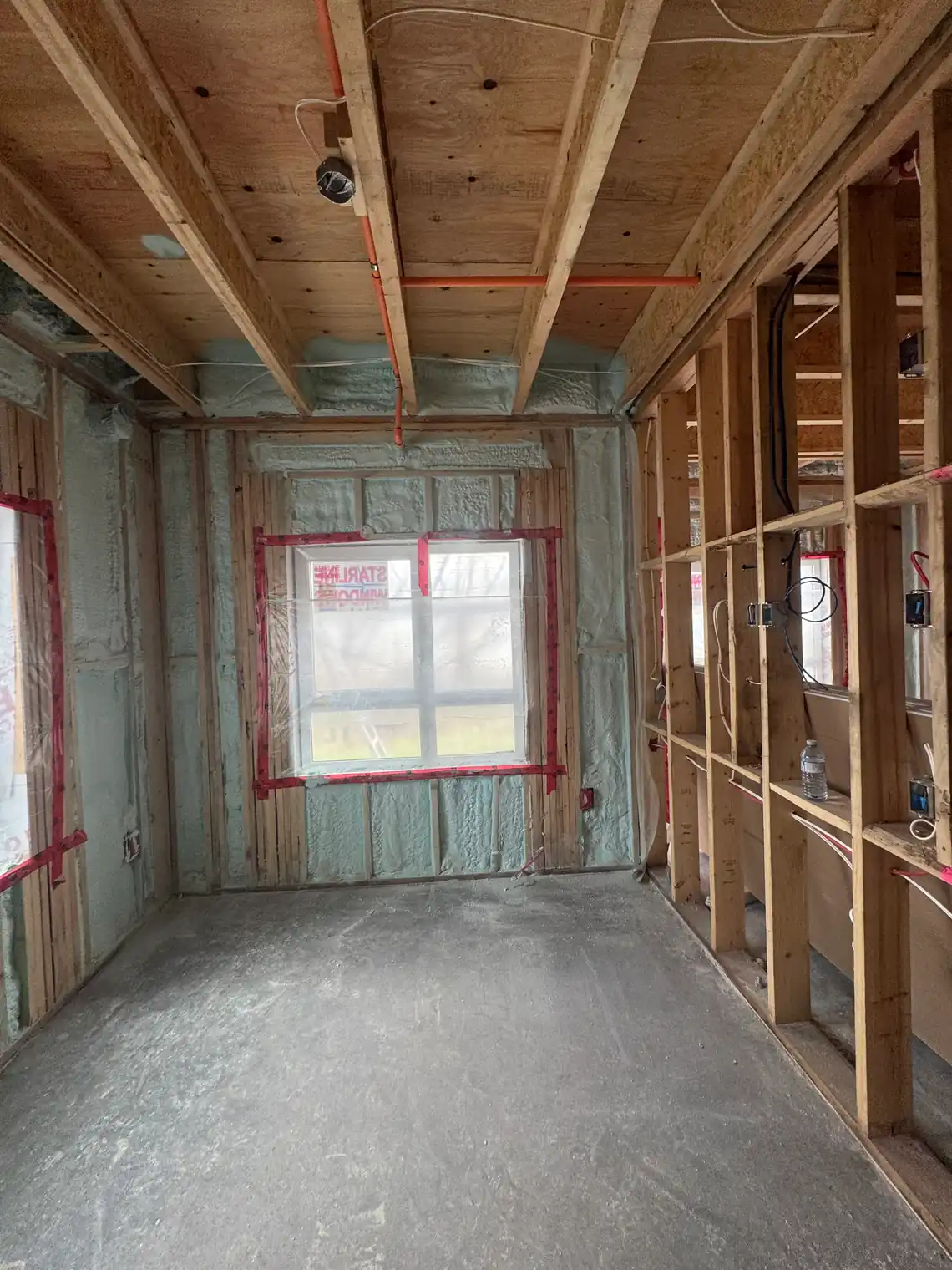
On a new build, the rim joist is the easy win. The framing is open, the crew can spray the whole band before the basement gets finished, and the house starts its life sealed at the spot most houses never seal at all. Do it at the framing stage and you also tighten the building enough that the mechanical can sometimes be sized down, which is money back at design instead of money spent later.
On an existing home, we reach the rim joist from the basement or the crawl space. It is more careful work, because we are spraying around finished spaces, but it is the same fix and the same result. If your crawl space is also a mess, it usually makes sense to do both at once, and our crawl space insulation guide for BC walks through that.
While we are down there, there is one more spot most builders skip. Under slab insulation. The concrete floor of a basement or slab-on-grade sits right on the cold ground and pulls heat straight down. On a new build you can insulate under the slab before the pour, and paired with a sealed rim joist it closes the bottom of the house off for good. On an existing slab the options are narrower, but it is worth asking about during the assessment.
Can I just foam it myself with cans?
You can try. People do. The store sells cans and froth packs of foam, and the rim joist looks like a quick weekend job.
Here is how that usually goes. The consumer foam is a lower grade plastic, made for sealing a gap the size of a pencil. Sprayed across a whole rim joist it almost always reverts to liquid, because it was never built to cover an area that big. We have shown up to scrape that sticky mess off more than one rim joist before we could do the real job. Professional closed-cell foam is a different product entirely, sprayed at 800 psi by an operator who knows what that is supposed to feel like. The difference is the equipment, the product, and the hands running it. That is a crew, not a kit.
For a single small gap, a can of foam is fine. For insulating the band that wraps your whole house, it is the wrong tool, and it will cost you twice.
What it costs and the rebates most people miss
Foam costs more up front than batt and poly. At market pricing it runs around $1.80 per board foot, while batt and poly comes in near $1.71 per square foot installed. On paper the cheap option wins. In your house, over ten years, it does not, because the rim joist is the spot you most want to seal once and forget.
The number most people miss is the rebate. BC insulation rebates pay out when a registered contractor does the work and files the paperwork, and DIY work usually does not qualify. The per-service rebate sits around $1,200. Pair your rim joist with another area like the crawl space or attic in the same visit and you can trigger a bonus on top, with the stacked average landing near $5,500 across all the eligible work. Across our residential jobs, heating and cooling costs typically drop 25 to 40 percent month to month after spray foam, and the payback on a typical install lands in the 2 to 4 year range. FortisBC keeps the current program details posted, and Natural Resources Canada has a solid plain-language guide to basement and crawl space insulation if you want to read up first.
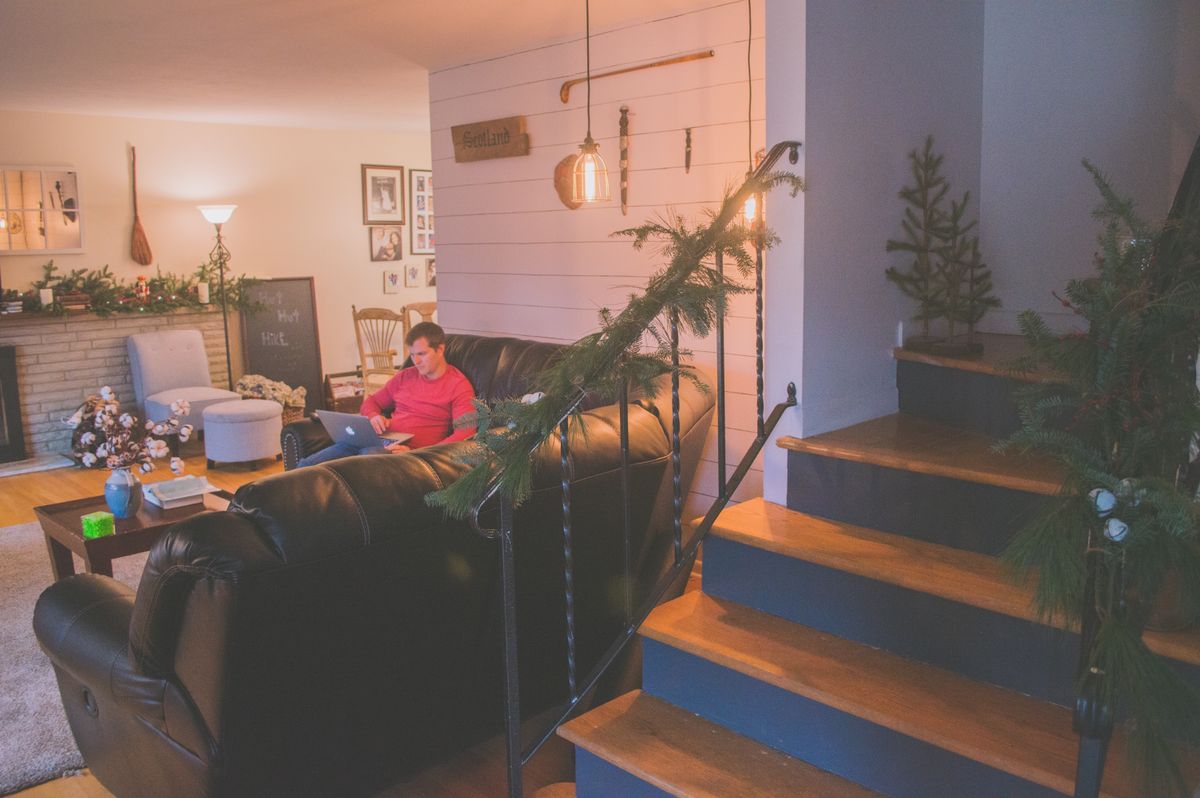
The calls that stick with us come years later, not the week after the job. Warmer floors. A heating bill that finally makes sense. No drafts low along the walls, no cold rooms over the basement, nothing to fix. You pay for the rim joist once and you feel the difference for the life of the house. For what the work looks like across the whole house, our spray foam insulation in Kelowna page walks through it.
Get a real number before you crawl back out
Before you buy a kit of foam or jam another batt up there, get a measured plan. The free building assessment gets you a written inspection of the rim joist and everything around it, a rebate report showing exactly what your project qualifies for, and a firm price where the number we give you on site is the number on the invoice. It costs you nothing, and you keep the report no matter who does the work.
Book a Free Building Assessment or call Jacob directly at 250-900-6613. Tell us what your floors feel like in February. We will tell you straight what is going on under them.