
Some attic insulation jobs you can do yourself. Most you should not. Attic insulation installers earn their fee on the parts you cannot see from the attic hatch: air sealing, even blown-in depth, and the rebate paperwork that pays for a real chunk of the work. Rolling a few batts into an open attic on a Saturday is fair game. Renting a blowing machine or spraying foam out of a box is where weekends go to die. Here is the honest line between what you can hand off and what you can keep.
What you can actually do yourself
I am not going to pretend every attic job needs a crew. Plenty do not.
If your attic is open, easy to move around in, and just needs more on top, batt rolls are an honest DIY project. You buy the rolls, you lay them out across the joists, you do not crush them, and you wear a respirator because nobody enjoys breathing fibreglass. A careful homeowner can do this on a weekend and save the labour.
Sealing the obvious stuff counts too. A bead of canned foam around a plumbing stack or a gap where a wire drops through the ceiling is exactly what canned foam is for. Small patches, small gaps. That is the job it was built for.
So if that is your situation, you do not need us. We will say that to your face. A contractor who tells you to hire him for a job you can do yourself is not a contractor I would trust with the jobs you cannot.
Where DIY starts to cost you money
Here is where the weekend math turns on you.
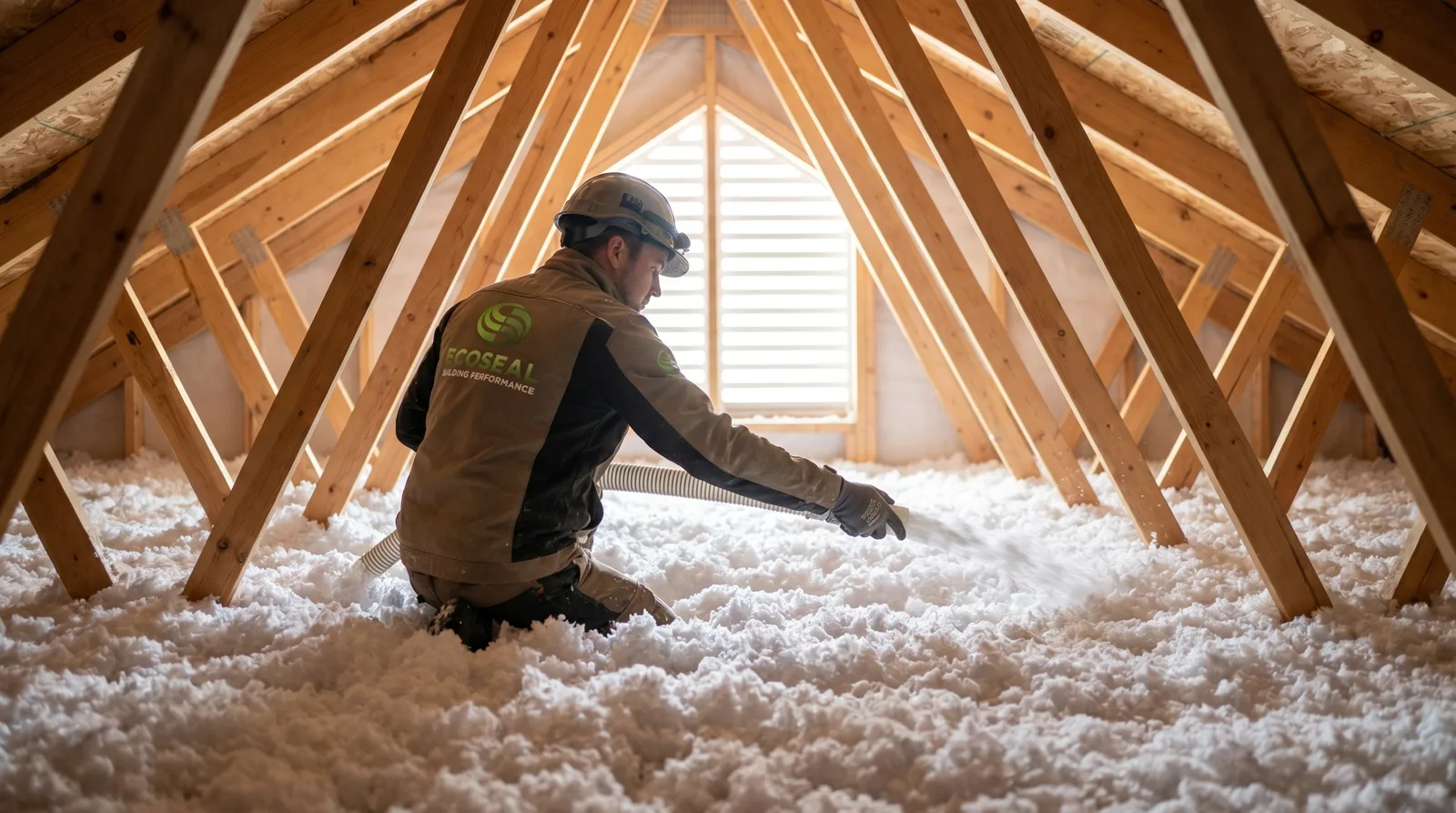
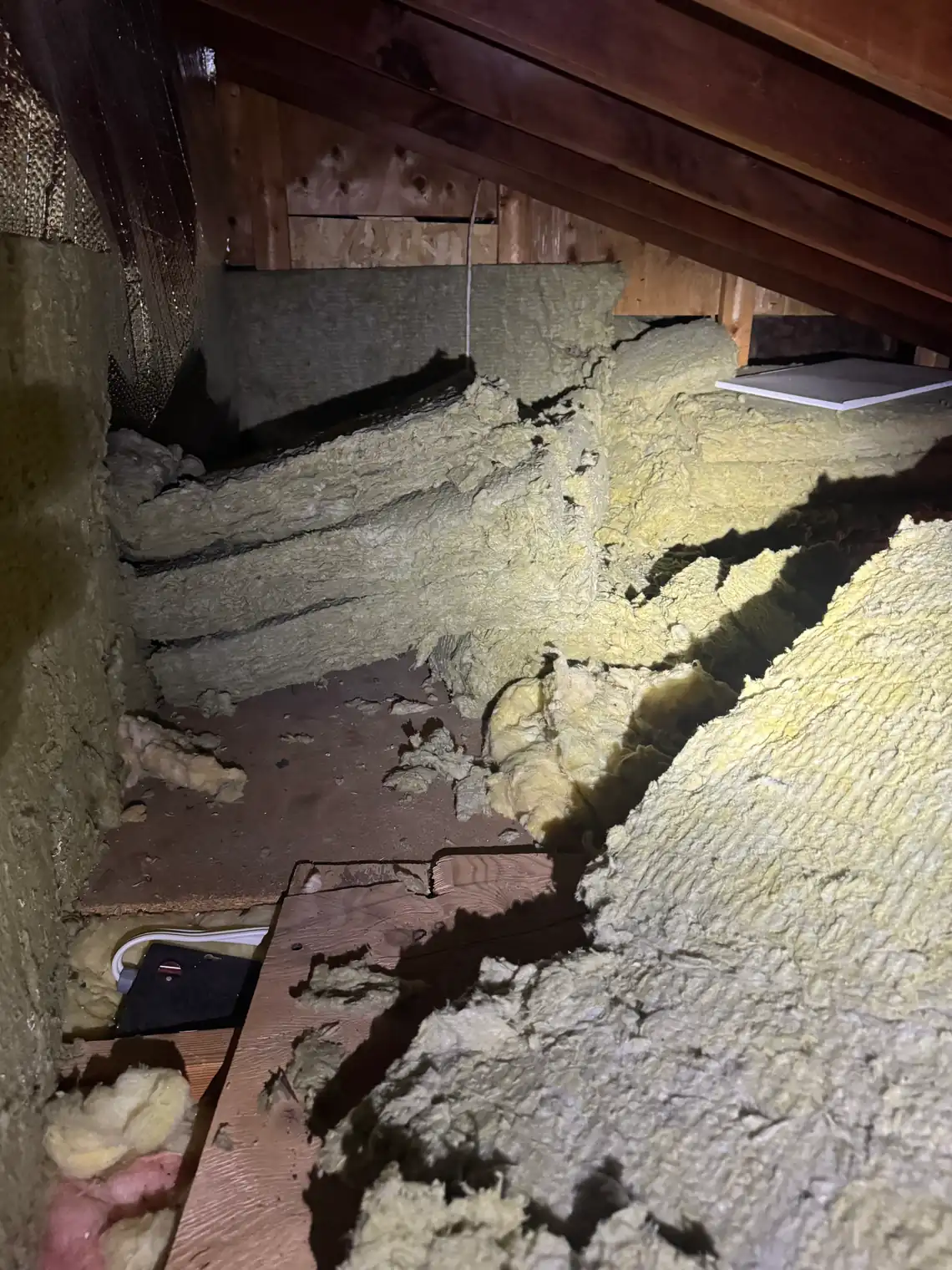
The first trap is blown-in insulation. You can rent a blowing machine for the day, and the rental looks cheap on the receipt. What the receipt does not tell you is that getting even depth across a whole attic is harder than it looks. Loose fill drifts and settles. A thin patch in the back corner is a cold spot you will never see from the hatch, and you only find out about it on your January bill. Installers blow to a measured depth because they do it every day. Blown in attic insulation done right is boring and even. Done in a hurry by someone learning on the job, it is a map of where your heat is escaping.
The second trap is foam in a box. This is the one that ends in tears. Those froth packs and cans are a lower-grade plastic formulation meant for small patches. Spray a large area with them and, almost every time, the foam reverts to liquid. We have been called in to clean up exactly that. Somebody buys a kit, sprays a wall or a ceiling, and the product slumps back into a sticky mess because it was never made to go on like that. Consumer foam is for gaps. Professional foam is a different product applied with different equipment by someone who knows what 800 psi is supposed to feel like.
That difference is not the foam being fussy. It is the foam being foam. The equipment, the product, and the operator are the whole job.
What attic insulation installers actually bring
Most people think a spray rig is a gun and a truck. Show up, pull the trigger, go home.
What they do not see is everything behind the gun. The rig is hundreds of parts: heaters, pumps, hoses, proportioners, pressure gauges, temperature controls. Any one of them can take the whole system down in the middle of a job. The thing that separates a good crew from a bad one is not how they hold the gun. It is knowing which of those hundred parts is causing the problem and getting the rig back up fast. Application is half the job. Maybe less. I did not expect to learn that when I started either.
That is what you are paying an installer for. Certified equipment. Density checks. Two inch passes. The knowledge that lives in the rig and the hands running it. None of that comes in a box.
Spray foam has a bad reputation in some corners, and it is worth being honest about why. The product is not the problem. The product is the best insulation you can buy. The bad reputation comes from bad installs: uncertified foam, wrong technique, DIY attempts with the consumer-grade stuff. When foam goes wrong it goes wrong quietly, behind your drywall, and it is catastrophically expensive to fix. That is the entire reason certification and a workmanship warranty exist. You cannot inspect the inside of a finished wall. You are trusting that the crew knew what they were doing.
The rebates DIY leaves on the table
This is the number most people miss, and it is usually the biggest one.
Most BC rebate programs only pay out when a registered contractor does the work and files the paperwork. They want a measurement before, a measurement after, and a real company name on the form. Do the job yourself and you do not just lose the labour savings you were chasing. You lose the rebate, which on a typical home is the largest single line in the whole calculation.
The numbers are real. The per-service rebate sits around $1,200, and doing two or more services in one visit, say the attic and the crawlspace, triggers a bonus on top of that. Across all the eligible residential work the stacked average comes out near $5,500. On one Kelowna attic this past January we took the insulation from R-20 up to R-50 and captured $1,200 in rebates for the homeowner. We are HPCN certified, which is the boring credential that lets us register your project for programs a lot of contractors never bring up.
This is also why we tell people to think about the attic and the crawlspace spray foam in Kelowna together. One crew, one mess, one day, and the rebate math works harder. Across our residential jobs, heating and cooling costs typically drop 25 to 40 percent month to month after spray foam. The full list of what stacks lives on our BC insulation rebates page.

How to decide
Run it through three questions and the answer usually shows up on its own.
Is the attic open, accessible, and just thin? A batt top-up is a fair DIY job. Go ahead.
Does the job need even blown-in depth, air sealing, or foam? Hand it off. The savings you think you are getting evaporate once you count the rental, the wasted material, the cold corners, and the rebate you can no longer claim.
Is there anything strange up there, like old wiring, vermiculite, or moisture? Stop and book an assessment before anyone, including you, adds insulation. Burying a problem under R-50 does not fix it. It just hides it until it is worse.
When the answer points to hiring it out, the contractor matters more than the material. A good attic insulation installer in Kelowna should be willing to talk you out of the wrong job, not just sell you the most expensive thing on the truck. If you want the full breakdown of what the work runs before you call anyone, our attic insulation cost guide for BC lays out the real numbers. For the cases where foam is the right call, the spray foam insulation in Kelowna page walks through where it earns its keep.
The calls that stick with us come years later, not the week after the job. Heating bills noticeably lower. The house quieter than it used to be. No moisture, no callbacks, nothing to fix. You pay for the attic once and you notice the difference for the life of the house. Insulation is boring right up until the day your bill makes it interesting.
Get a real number before you rent a thing
Before you book a machine or buy a kit, get a measured plan. The free building assessment gets you a written inspection checklist, a rebate report showing exactly what your project qualifies for, and a firm price where the number we give you on site is the number on the invoice. It costs you nothing, and you keep the report no matter who does the work.
Book a Free Building Assessment or call Jacob directly at 250-900-6613. Tell us what you were planning to do yourself. We will tell you straight whether you should.